

In the old days when we surfed through the hundreds of channels with seemingly nothing to watch, I couldn’t help but stop what I was doing and watch when I stumbled on The Shawshank Redemption. No matter what part of the movie it was, I would sit down and watch it all the way through to the end. There’s something about Morgan Freeman’s narration that just sucks me in every time. In fact, I watched it the other day on a late night flight home from somewhere.
My brain works in funny ways. I see patterns in unexpected places. I can’t explain it. I don’t know why, but watching Brooks Hatlen alone in the halfway house after a lifetime in prison made me think of Colin Powell. The link between the two isn’t guilt. It’s the human wiring that institutions shape.
Colin Powell was a soldier, a statesman, and one of the most admired Americans of the last fifty years. He was also, like Brooks Hatlen, an institutional man. He was the product of the US Army. Commissioned through ROTC, tested in battle in Vietnam, multiple commands, served as National Security Adviser, Chairman of the Joint Chiefs during the first gulf war, and Secretary of State.
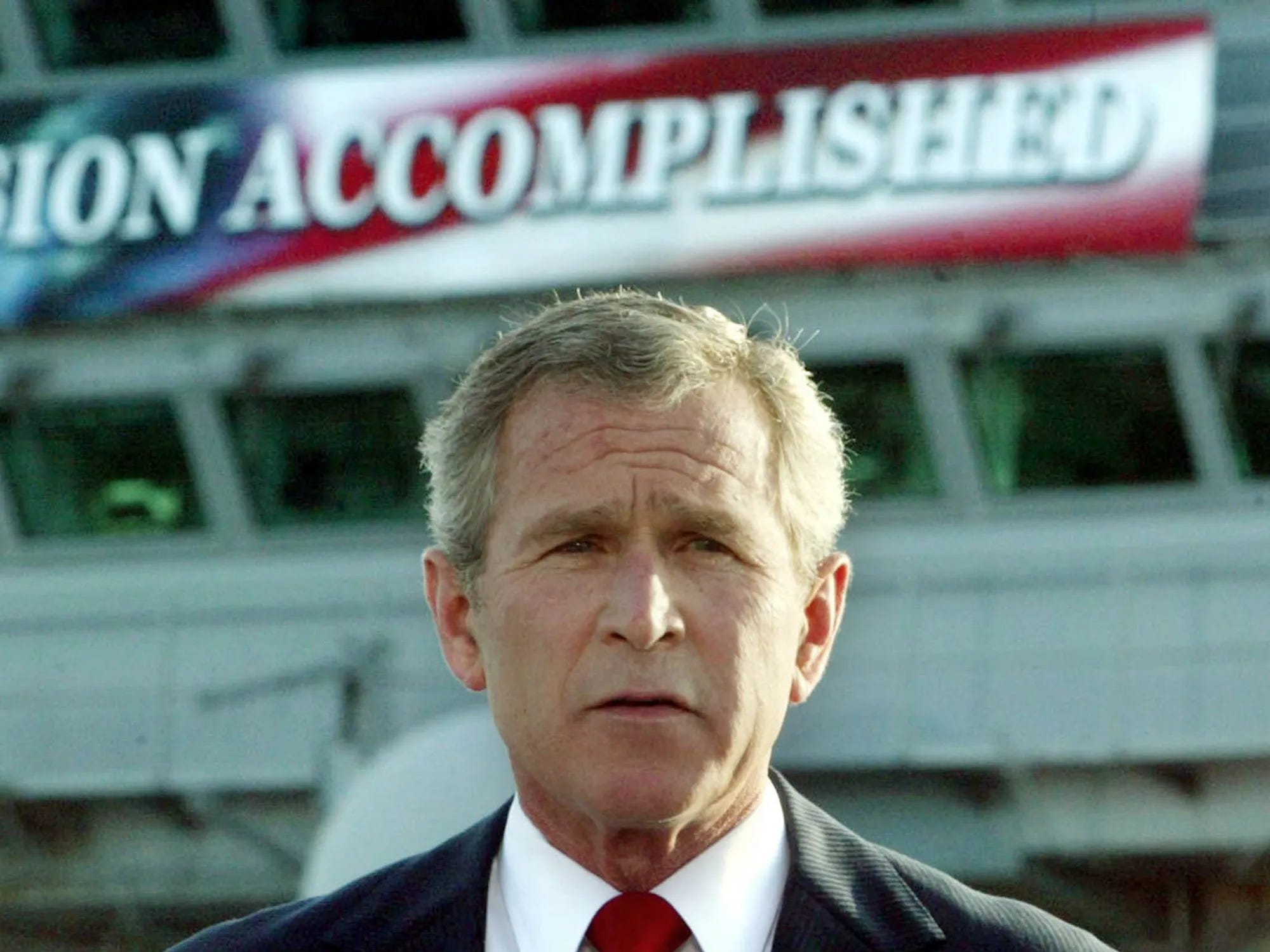
When faced with the sketchy evidence of the presence of weapons of mass destruction in Iraq, he had a private conversation with President Bush warning him of the pottery barn rule, “You break it you, own it.” Powell was skeptical of the intelligence. He shared his reservations with the President privately and went to the United Nations to make the case when the President decided to go to war. A good soldier lines up behind the chain of command once a decision is made. General Powell was a very good soldier.
Andy Dufresne doesn’t go to the United Nations to do the President’s bidding. Andy Dufresne leaks his reservations to Bob Woodward, takes off to Zihuataneo and blows the lid off the whole shaky thing. Andy Dufresne is the rare individual who challenges the institution and has the courage to act on what he knows to be true.
Mark Felt was Andy Dufresne.
Daniel Ellsberg was Andy Dufresne.
John McCain, who refused an early release to stay with his men, was Andy Dufresne.
Pee Wee Reese, who put his arm around Jackie Robinson and ended the debate about whether he belonged, was Andy Dufresne.
Secretary Powell was Brooks Hatlen. That doesn’t make him a bad man, it makes him human. He was the product of the institutions where he spent his adult life. He was loyal to the President. To the President’s father. And to the chain of command.
I’ve written about failure of institutions for much of the last year. Challenger, Boeing, the War on Drugs, Venezuela, Iran, Intel as if the institutions are people. They are not.
With due respect to the Supreme Court. Institutions aren’t people. They are led by people organized into teams and hierarchies and exhibit the same weaknesses as any group of humans. I’ve written about the institutions without addressing the frailties and failings of the individuals who comprise those teams. It’s a missing piece of the puzzle and unlocks the mystery of why organizations fail to act on information they already possess.
Recognizing that we are conditioned to belong, leaders at every level have to build feedback loops and synthesis hubs that encourage rather than punish candid feedback. Boards of directors, red teams, employee surveys, internal audit, steering committees, project governance, safety reviews. We already have the mechanisms; but we consciously and subconsciously filter bad news and dissenting opinions to maintain organizational harmony. It shouldn’t take the courage of Mark Felt to stop a doomed launch or ensure that the reinforcing safety mechanisms are in place at Deepwater Horizon.
If that sounds irrational, it isn’t. There’s a reason smart, seasoned people stay silent even when the stakes are catastrophic. Psychologists Roy Baumeister and Mark Leary
published research that reframed how we understand human motivation. Their conclusion was precise and unsettling. The need to belong isn’t a preference or a cultural artifact. It’s a drive as fundamental as hunger. Threats to belonging produce the same psychological distress as physical pain.
Why didn’t Secretary Powell go public with his reservations? Write an op-ed in the Wall Street Journal? Resign in protest?
Powell wasn’t a passive participant or victim. He was a kid from the Bronx shaped by the army. He made a choice informed by a lifetime spent in the very institution he served. His greatest moment of individual triumph came about from the disciplined application of overwhelming force aligned with a doctrine that he wrote and championed. His vigilance protected the soldiers he led from the mistakes he lived through in Vietnam.
Layer on the personal loyalty to President Bush 41 and Powell was caught in a Shakespearean drama. The trusted aide to the former President was brought in to serve that very President’s son and provide the experience and wisdom, gravitas, and credibility the new commander in chief lacked.
Powell was trapped by the very institution he served. He was hard wired to line up behind the chain of command. He trained a lifetime to quash his personal perspective and do the administration’s bidding once the decision to go to war was reached.
In an interview with Al Jazeera Secretary Powell acknowledged this failure, “It has blotted my record, but you know, there’s nothing I can do to change that blot. All I can say is that I gave it the best analysis that I could.” It was far deeper than a blot. It was the human cost of belonging.
There’s a deeper tragedy in the story of the run-up to the Iraq War. The other man who was uniquely positioned to stop it was trapped by the respect and precedent. He was a former Congressman, Ambassador, CIA Director, Vice President and President. He was also a father. A father who, out of loyalty to his son and the institution of the presidency, had to hold his tongue.
Of course, he dispatched one of his noblemen, Brent Scowcroft, to deliver a warning to the son on the op-ed pages of the Wall Street Journal. But the conversation between a father, a son, and two Presidents never happened.
When Bob Woodward later asked the younger Bush if he had consulted his father before the invasion, the answer was chillingly clear: he didn’t need to, because he was appealing to a “higher father” for strength. His heavenly father didn’t push back. His earthly father most certainly would.
If your source of validation doesn’t have the capacity to disagree with you, it isn’t a feedback loop. It’s an echo.
Powell couldn’t speak out because of belonging. Bush 41 couldn’t speak out because of institutional loyalty. And the man behind the resolute desk couldn’t hear either of them because he had already reached his conclusion and was working backward. Psychologist Ziva Kunda called this motivated reasoning. We don’t reason towards the truth. We reason toward the conclusions we’re already motivated to reach. A discussion with a higher father who cannot disagree is the perfect validation for a decision that’s already been already made.
Faith alone is not the problem. When faith replaces the grueling work of stress testing assumptions, we become passive participants looking for inoculation from the grave consequences of our decisions.
We’ll never know if one conversation between father and son, between two Presidents over coffee overlooking the ocean in Kennebunkport might have changed the outcome.
This is the ultimate institutional breakdown. While Powell and the elder Bush were trapped by the norms of the Presidency, the man behind the resolute desk decided to seek spiritual rather than strategic guidance.
This is institutional capture at the individual level. Institutions fail because we’re human. That humanity is hard coded into our DNA. It prevents us from speaking out even when we know we should. It prevents us from asking the hard questions and interrogating facts that are obvious in hindsight. Not because we’re evil. Because of our deep seated need to belong.
President Bush never asked the second level questions. What is the worst possible outcome from this decision? What happens if they don’t throw rose petals at the feet of the conquering heroes? What if there are no weapons of mass destruction? Who will keep the lights on and keep the water running once we depose the Ba’athist regime?
One tragedy of the war in Iraq is that the two men with the trust, credibility, and prestige to stop it couldn’t because they were loyal, human, and conditioned by a lifetime inside the institution to conform to its norms. The other is that the man charged with making the decision lacked either the humility, instinct, or confidence to consult the one other person on the planet who faced similar circumstances a little more than a decade before.
The Iraq war was an extreme case and few of us will ever be in the room to make those decisions. But the same logic applies in every organization and many of the cases I’ve written about before. The engineer at Deepwater Horizon under pressure to stop the bleeding at Macondo, the flight director at NASA being pushed for a launch decision, the project manager whose implementation is over budget and facing delays, a CEO of a company whose traditional revenue model is under attack. None of them are Powell. None of them are going to war. But they are all running the same operating system. Loyal. Human. Conditioned by our DNA to conform and to belong.
In each of these cases, there was an Andy Dufresne, an engineer who identified a risk, an inspector who found a flaw. In every case their warnings were silenced by leaders whose incentives clouded their judgment. They buried the dangers while grossly underestimating the consequences.
The questions for the practitioner, the team leader, the board member reading this are straightforward.
Does the organization actively encourage and reward candor and dissent?
What role does fear play in the culture of our organization?
Does the system reflexively reject the contrarian opinion?
Do the pressures to meet quarterly targets overwhelm the data that points to risk?
Do we have a mechanism to synthesize competing points of view?
The warning signs are often visible. Our biological software is programmed to filter them out, to prioritize the group over the reality, and to rationalize the conclusions we've already reached. We stay inside the walls because it's safer to be wrong inside than to be right on the outside. Until, of course, it's too late.
Agree? Share it with a friend. Disagree? Share it with two.